
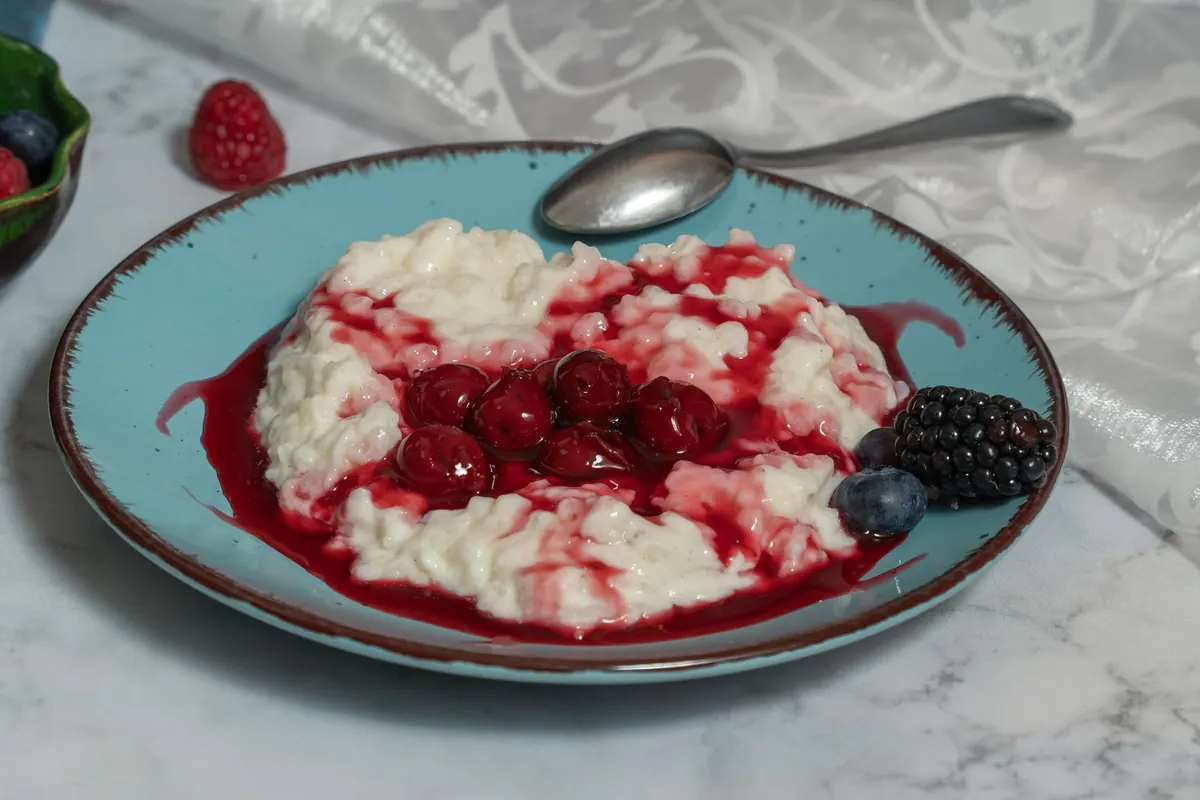
Set a bowl of rice pudding next to a bowl of tapioca pudding and they look like cousins: pale, creamy, spoonable. Then the spoon goes in. One is speckled with soft grains that still hold a little shape. The other is smooth and springy, and when you lift a spoonful it stretches, glossy and faintly see-through. Both are milk-and-starch desserts, and both are older than most of the recipes in your kitchen file. The resemblance stops right about there.
If you've met a gluey tapioca pudding or a watery rice pudding, the fault was almost never the idea. It was the starch. Once you know what each starch does in hot milk, both desserts become hard to ruin.
The Starch Is the Whole Story
Rice pudding thickens itself. As the grains simmer, their starch granules swell, soak up milk, and eventually soften enough to release starch into the liquid around them. Some grains stay intact, others collapse into the milk, and the finished dish is part grain, part custard.
Tapioca pudding has no grain to work with. Tapioca starch comes from cassava root; it is extracted, processed, and rolled into small pearls. What you're cooking is pure starch, and what you get is pure gel.
That single difference explains nearly everything else. Rice starch produces an opaque, faintly grainy body with a milky flavor of its own. Tapioca starch sets into something glossy, elastic and translucent, closer to a soft jelly than a custard. Tapioca also thickens at a lower temperature and firms up more as it chills, which is why cold tapioca pudding can almost be cut with the side of a spoon.
Rice Pudding: Grains That Stay Put
Start with the rice, because it decides the texture. Short and medium-grain varieties — Arborio, pudding rice, Carolina, or plain sushi rice — release plenty of starch and give you the creamy, slightly loose result most people picture. Long-grain rice, such as basmati or jasmine, holds its shape and stays separate, which makes a lighter, more brothy pudding. Neither is wrong; they are different desserts.
A workable starting ratio is one part rice to five parts milk, plus sugar to taste and a pinch of salt. Simmer it gently on the stove for 30 to 45 minutes, stirring often, until the grains are tender and the milk has thickened around them. Stirring matters here: it rubs starch off the grains and keeps the bottom of the pan from scorching. Baked rice pudding works the same way in a 325°F to 350°F oven, except you stir only occasionally and let a golden skin form on top.
From there, flavor is regional and generous. Cinnamon, nutmeg, vanilla, lemon or orange zest, raisins, a knob of butter, a spoonful of beaten egg yolk for richness. Indian kheer simmers rice with cardamom and nuts; Spanish arroz con leche leans on cinnamon and citrus; Scandinavian versions fold in whipped cream and almonds once the rice has cooled.
Tapioca Pudding: All Starch, No Grain
Tapioca pearls come in sizes, and the size changes the plan. Minute or "instant" tapioca is crushed and cooks in minutes. Small pearl tapioca, the classic pudding size, needs a soak — anywhere from 30 minutes to overnight in water or milk — followed by a gentle simmer of 20 to 30 minutes until the pearls turn fully translucent and tender. Large pearls are made for bubble tea and toppings; they need far longer cooking and rarely soften evenly in a milk pudding.
Salt the milk, simmer the soaked pearls gently, and stir only now and then to keep them off the bottom. Once the pearls are clear and soft, add sugar and vanilla and cook a few minutes more. If you want a richer pudding, temper a beaten egg yolk with a little hot milk and stir it in off the heat. Hard boiling or constant beating breaks the pearls down and can thin the mixture into soup, so keep the heat low and your spoon unhurried.
Tapioca itself tastes like nothing much, which is the point. The flavor comes from the milk, sugar, vanilla, a grating of nutmeg, a pinch of salt, maybe coconut milk or a spoonful of fruit purée. Serve it cold; it's at its best after a few hours in the fridge, when the gel has set.
Side by Side, in the Bowl
- Base: whole rice grains versus cassava starch pearls.
- Look: opaque ivory with visible grains versus glossy, translucent, almost glassy.
- Feel: soft grains in a loose, creamy sauce versus smooth, springy, gel-like.
- Best temperature: rice pudding is lovely warm, and good cold; tapioca pudding is best thoroughly chilled.
- On cooling: both thicken, but tapioca firms up far more and rice pudding stays spoonable.
- Stirring: rice pudding rewards frequent stirring; tapioca pudding prefers a light hand.
- Classic additions: cinnamon, nutmeg, raisins, zest, butter for rice; vanilla, nutmeg, coconut, mango or berries for tapioca.
- Gluten: both are naturally gluten-free, though it's worth checking labels on any packaged pearls or flavorings for additives.
Five Habits That Save Both Puddings
- Use milk with some fat in it. Whole milk, or milk cut with a little cream, gives you body and less risk of curdling. Plant milks work, but choose a barista-style or coconut version if you want the same richness.
- Salt early. A pinch of salt in the milk at the start makes both desserts taste sweeter and more like themselves.
- Cook it looser than you want it. Both puddings thicken considerably as they cool, and rice pudding keeps drinking up liquid in the fridge. Pull it off the heat while it still flows off the spoon.
- Add sugar late to tapioca. Sugar slows the softening of the pearls, so wait until they're translucent before sweetening.
- Temper your eggs. Whisk a splash of hot milk into the beaten yolks first, then return the mixture to the pan over low heat. Straight into hot milk, they scramble.
When It Goes Wrong
The rice pudding is watery
Almost always undercooked rice or too much liquid. Return it to a low simmer, uncovered, and stir until it thickens. A teaspoon of cornstarch whisked into a little cold milk, or an extra tempered yolk, will rescue a pudding that's already past saving by time. Leftovers that set like paste just need a splash of milk when you reheat them.
The tapioca is soupy or gummy
Soup usually means the pearls were boiled hard, beaten, or pulled off the heat before they turned clear. Next time, simmer gently and taste a pearl — it should be soft all the way through with no chalky center. Gummy pudding is the opposite problem: too much stirring, or too little liquid. Loosen the cooled leftovers with milk and stir just until smooth.
Which One to Make First
Pick by the weather and the mood. For a warm bowl on a cold evening, with cinnamon dusted over the top, make rice pudding — it's forgiving, cheap, and the whole pot smells like the inside of a bakery. For a cold, clean, fruit-topped dessert that holds its shape on a plate, make small pearl tapioca and give it a full afternoon in the fridge.
Start with a small batch and a written note of your ratios, because both puddings depend more on your pan and your stove than on any recipe. One more thing worth saying plainly: if you're cooking for someone with a dairy allergy, a cassava sensitivity, or another dietary restriction, check the labels on packaged tapioca and plant milks, and ask a doctor or dietitian when you're unsure. Then make a second batch, because the first one rarely makes it to the fridge.
Photo: Gundula Vogel / Pexels