
Custard is eggs, dairy, sugar, and heat. That's the whole list. Yet those ingredients can arrive at the table as a trembling pot de crème or as a glossy sauce poured over a slice of cake. The difference is mostly mechanical: whether the mixture is baked still in a water bath or stirred over direct heat until it thickens. Knowing which method fits the dessert in front of you saves an afternoon of accidental scrambled eggs.
One Mixture, Two Very Different Methods
Both custards begin the same way. Whisk eggs — whole, yolks only, or a mix — with sugar, then combine them with hot milk or cream slowly enough that the eggs don't cook on contact. That tempering step belongs to both methods. After that, the paths split. One custard goes into the oven and stays perfectly still. The other stays on the burner and never stops moving. Heat and agitation decide how the egg proteins link up, and that determines whether the finished custard is sliceable or pourable.
Baked Custards: Gentle Heat in a Water Bath
Baked custards — crème brûlée, crème caramel, flan, custard pie, pots de crème, bread pudding — depend on the water bath, or bain-marie. Ramekins sit inside a larger pan, hot water comes halfway up their sides, and the whole setup goes into a moderate oven, usually somewhere around 300 to 325°F. The water buffers the heat. It can't climb past boiling, so the custard warms slowly and evenly from the outside in.
Egg proteins set in the neighborhood of 170 to 180°F. Push much beyond that and they squeeze out water, which is how custard turns grainy and weeps. The bath keeps everything on the safe side of that line while the mixture firms into a soft gel.
Doneness is about jiggle, not the clock. Pull the pan when the custard has a set edge and a center that wobbles like firm gelatin — a two- or three-inch wobble, not a liquid slosh. A knife inserted an inch from the rim should come out clean. Baked custards then need to cool and chill for several hours before they're at their best.
Stirred Custards: Constant Motion on the Stovetop
Stirred custards — crème anglaise, pastry cream, lemon curd, sabayon — thicken over direct heat with a whisk in your hand the entire time. Movement does two jobs. It spreads heat evenly so no portion of the mixture sits against the pan long enough to overcook, and it breaks up any egg proteins that do begin to clump.
Use a heavy saucepan, medium-low heat, and a whisk or silicone spatula that reaches into the corners. Stirred custards are ready when they coat the back of a spoon and a swipe of your finger leaves a clean trail, or when an instant-read thermometer reads about 170 to 175°F. Pastry cream and lemon curd usually cook a little further, since their starch, butter, or acid adds stability.
Texture, Structure, and How They Behave
The two custards feel nothing alike because they set differently. A baked custard is a gel: a delicate protein network that traps liquid, holds a shape, and cuts cleanly. A stirred custard is a thickened liquid — a sauce with body.
- Heat source: indirect and buffered by the water bath versus direct on the burner.
- Agitation: none once the pan goes in the oven versus constant whisking.
- Body: a sliceable, spoonable gel versus a pourable or spoon-coating sauce.
- Starch: rarely used in baked versions; common in pastry cream, where it also guards against curdling.
- Forgiveness: a bath tolerates some timing slop; a stirred custard on high heat does not.
- Timing: baked custards need hours of chilling; stirred custards thicken as they cool and are ready sooner.
When to Use Baked Custard
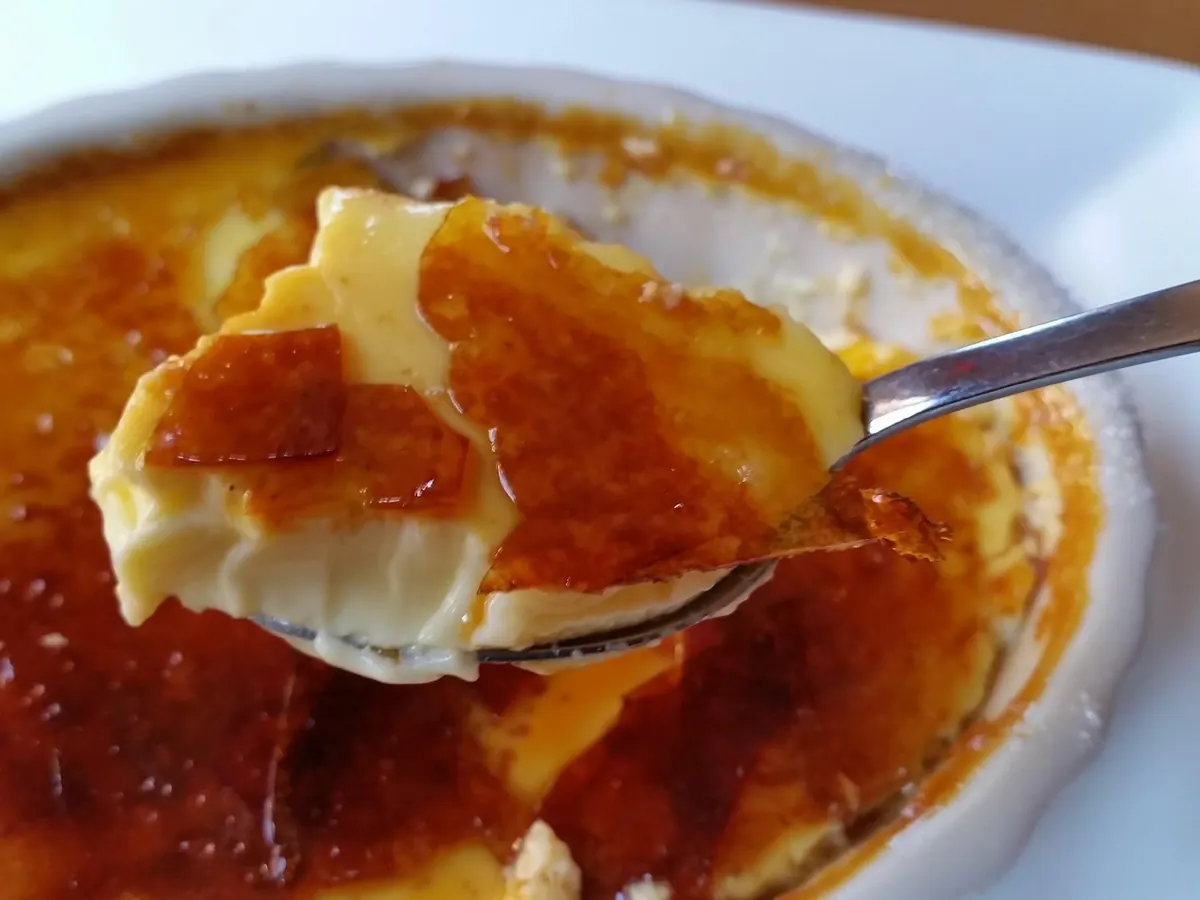
Choose baked when the custard is the dessert and needs to stand on its own. Crème brûlée wants that firm-but-trembling interior so torched sugar has something to crack against. Flan needs to unmold. Custard pie needs to slice. Baked custard also scales well: a large bread pudding or a custard tart for eight is easier than standing over a pot for the same crowd. And a baked custard that overshoots slightly is usually still edible — it just loses some silkiness.
When to Use Stirred Custard
Reach for the stovetop when the custard is a component rather than the headline. Crème anglaise dresses poached pears, chocolate cake, or a steamed pudding. Pastry cream fills éclairs and fruit tarts. Lemon curd goes into a tart shell or between cake layers. Sabayon makes a light, warm finish for berries. Stirred custards also take flavor beautifully — vanilla bean, citrus zest, espresso, and liqueur all steep in the dairy first and get strained out afterward, leaving a smooth, glossy sauce.
Troubleshooting: Curdling and Cracking
Curdled stirred custard looks grainy, with flecks of cooked egg. Pull the pan off the heat at once and whisk hard for a few seconds; if lumps remain, strain the custard and carry on. Prevention is straightforward: keep the heat low, take the hot dairy off the burner before tempering the eggs, and don't step away.
An overbaked custard shows a porous, weeping surface and a rubbery bite. If you catch it early it's still worth serving with fruit. Next time, drop the oven temperature, add more water to the bath, or start checking ten minutes sooner. A small crack where the center puffed is harmless — the custard underneath is almost always fine.
One practical note: set the ramekins on a rack inside the roasting pan, slide the pan halfway out of the oven, and pour the hot water in there. Carrying a full water bath across the kitchen is how most custards end up on the floor.
Which One Belongs on Your Table
Pick the method first, then the recipe. Something to unmold, slice, brûlée, or serve in its own little dish? Baked. Something to pour, spoon, pipe, or fold? Stirred. If you have a favorite custard already, notice which side of that line it sits on and your next dessert decision gets quicker. Both reward the same habits: fresh eggs, measured ingredients, gentle heat, and the discipline to stop cooking a minute before you think you should.
Photo: 3Msuccess / Pixabay